
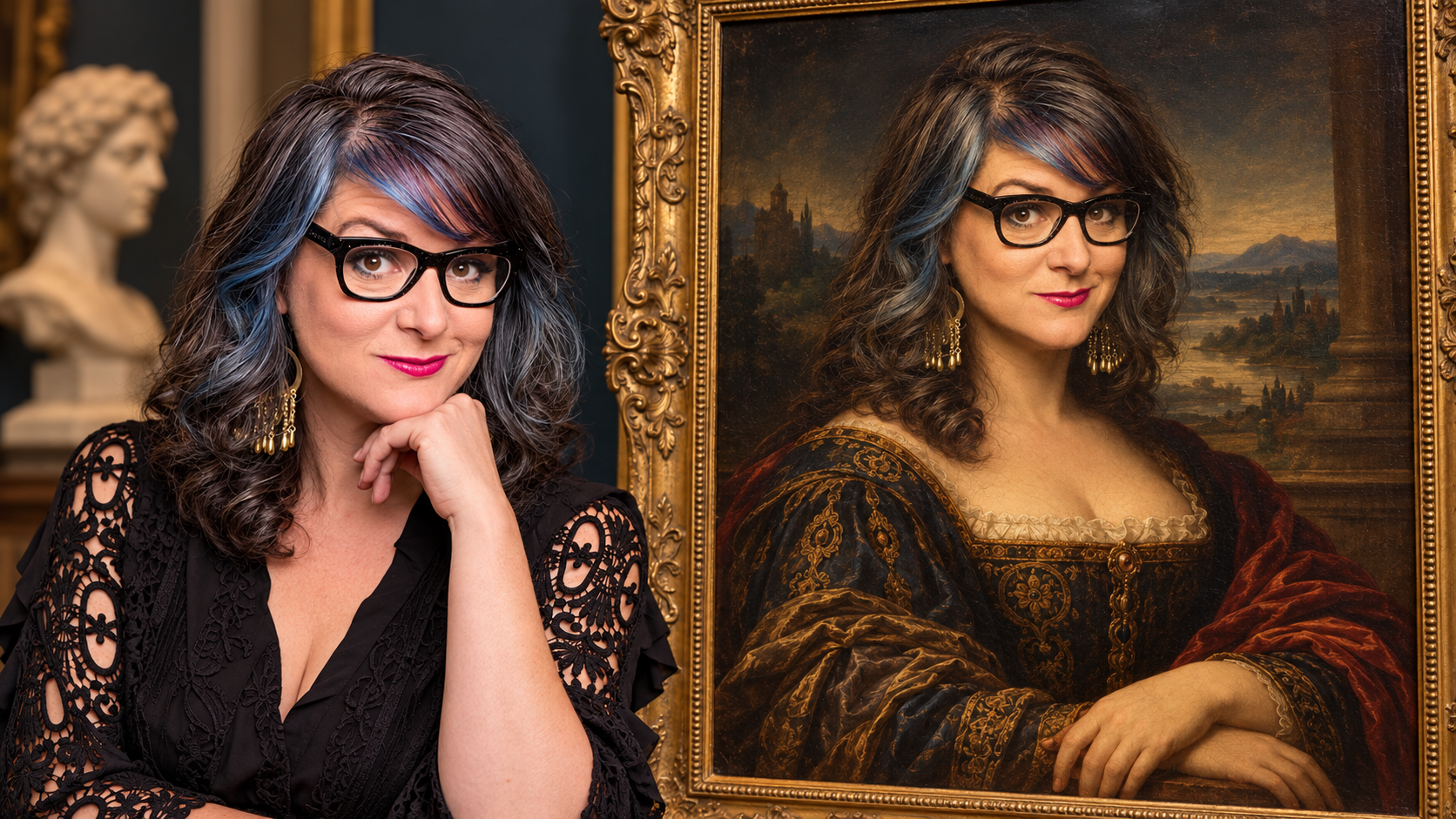
A great style transformation should still feel unmistakably like the person in the original photo. This prompt keeps the subject’s identity intact while translating the portrait into the visual language of a High Renaissance oil painting.
Instead of simply adding a vintage filter, it rebuilds the image around classical composition, soft chiaroscuro, sfumato-like transitions, atmospheric landscape depth, period-inspired clothing, and the tactile surface of aged oil paint.
Leonardo-Style Renaissance Portrait Prompt
Use my uploaded portrait as the identity reference and create a single finished Renaissance oil portrait inspired by Leonardo-era High Renaissance portraiture. Preserve the subject’s recognizable identity: facial structure, age, skin tone, eye shape, nose, lips, hairstyle, hair color, glasses or other defining accessories, and overall expression. The person should clearly remain the same individual from the reference. Transform the modern portrait completely into a classical painted scene. Wardrobe: replace modern clothing with refined late-15th- to early-16th-century Italian-inspired garments using believable velvet, linen, silk, brocade, subtle embroidery, and restrained gold detailing. Keep the costume elegant and historically suggestive rather than theatrical or fantasy-like. Pose: calm three-quarter portrait pose, relaxed shoulders, composed expression, natural hands if visible, dignified but approachable presence. Lighting: soft directional chiaroscuro with gradual transitions from light into shadow. Use subtle sfumato-like blending around the cheeks, jaw, hairline, hands, and background. Avoid hard modern studio lighting. Skin and face: preserve realistic age and individuality. Translate skin into layered oil-paint glazing with gentle tonal variation rather than airbrushed digital skin. Do not make the subject younger, thinner, more symmetrical, or generically beautiful. Background: atmospheric Renaissance landscape with distant hills, winding paths or water, faint architectural forms, soft haze, and muted perspective. Keep the background secondary to the subject. For a darker variation, use a near-black old-master background instead. Palette: warm umber, burnt sienna, muted burgundy, deep olive, ochre, cream, smoky blue-gray, restrained gold. Painting treatment: convincing oil-on-panel or fine-canvas surface, layered glazing, delicate brushwork, subtle varnish depth, restrained craquelure, softly modeled forms, realistic fabric texture, and museum-quality old-master finish. Composition: balanced High Renaissance portrait composition, approximately waist-up or seated three-quarter view, subtle triangular structure, quiet negative space, and calm visual rhythm. The final image must look like an authentic classical oil painting rather than a photograph with a digital filter. OUTPUT ONLY THE FINISHED PAINTING. Do not show the reference photo, before-and-after comparison, split screen, gallery mockup, picture frame, poster layout, captions, labels, typography, logos, watermarks, modern objects, contemporary clothing, obvious CGI, exaggerated fantasy elements, cartoon brush strokes, heavy sepia, or excessive aging effects.
What This Prompt Creates
This prompt creates one finished Renaissance-inspired oil portrait based on an uploaded modern photograph.
The subject remains recognizable, but the camera-photo appearance is replaced with classical painted form: subtle brushwork, layered glazing, softened tonal transitions, warm skin tones, restrained color, period fabrics, and a dark or atmospheric background. The result should feel like a convincing museum painting rather than a modern portrait with a paint filter applied.
How to Use It
Upload a clear portrait where the face, hairstyle, glasses, and other defining features are easy to see. The reference can be casual; the prompt will replace the modern setting and wardrobe while preserving the person’s identity.
Use the full prompt as written, then customize the wardrobe, background, palette, and degree of formality. If you want stronger resemblance, emphasize the exact facial structure, eyewear, hairstyle, age, and expression from the reference.
The generated result should be the painting only. Do not ask the image model to include the original photo, a split-screen comparison, a gallery wall, captions, or graphic design unless you are specifically making promotional artwork.
Make It Your Own
Noblewoman Portrait: Rich burgundy velvet, embroidered sleeves, gold details, and a distant Tuscan landscape.
Scholar Study: Dark robes, a wooden desk, handwritten pages, books, and restrained candlelit warmth.
Royal Court: Deeper jewel tones, brocade, subtle jewelry, architectural columns, and a more formal seated pose.
Soft Madonna: Muted blue, cream, and earth colors with extremely gentle light, calm expression, and soft atmospheric transitions.
Dark Background Study: Remove the landscape entirely and use a near-black background so the face and hands emerge slowly from shadow.
Tips for Better Results
Preserve identity first. Ask for the same facial proportions, glasses, hairstyle, age, expression, and distinctive features from the reference before introducing the Renaissance treatment.
Use soft chiaroscuro rather than theatrical spotlighting. The light should feel gradual, with deep but readable shadows and delicate transitions across the face.