
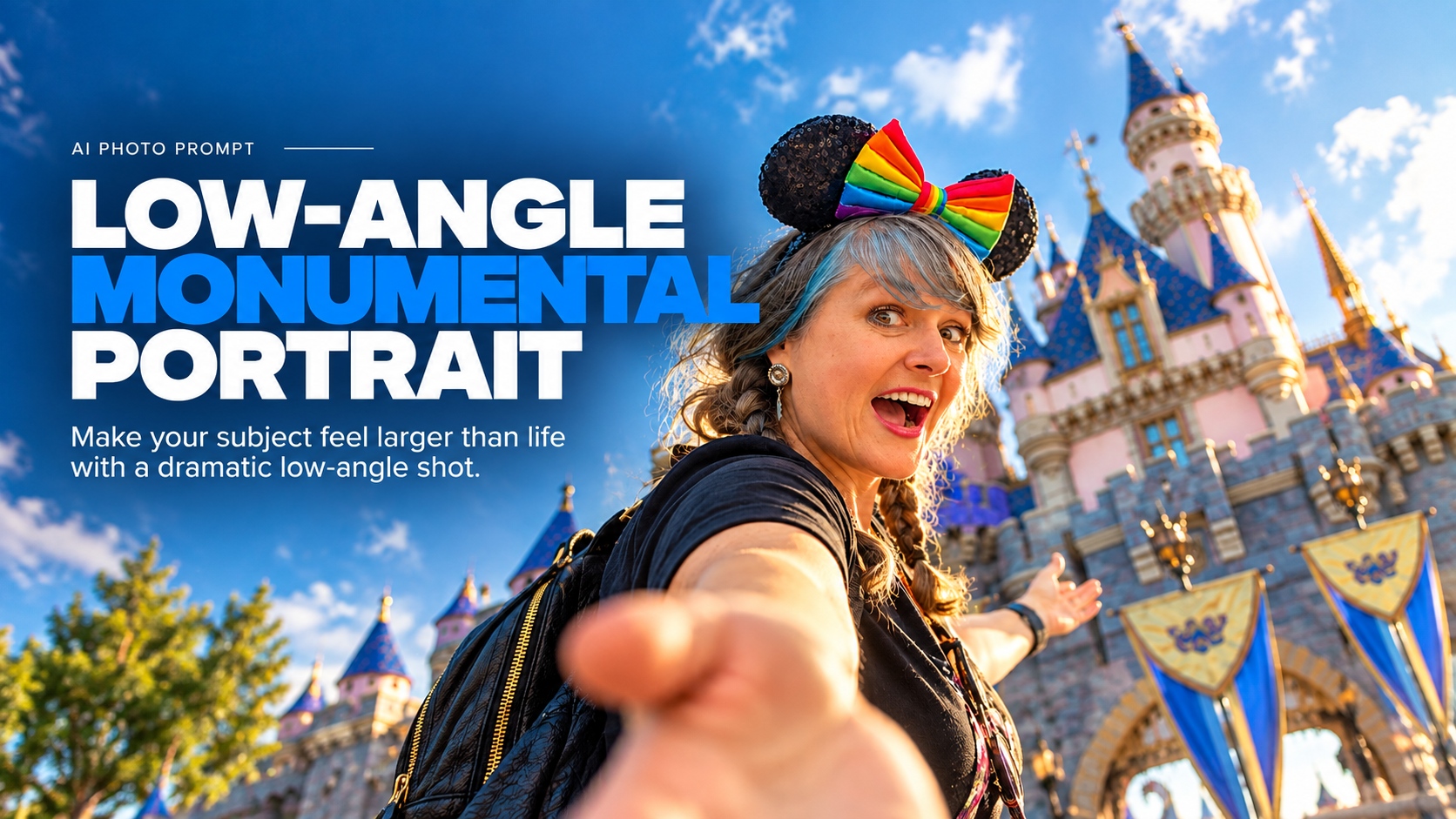
Low angles can make a portrait feel powerful in seconds, but there is a fine line between monumental and accidentally cartoonish.
This prompt uses camera height, lens choice, subject distance, and architecture together so the subject feels larger-than-life without stretching limbs or turning perspective into a gimmick.
Low-Angle Monumental Portrait Prompt
Use my uploaded portrait as the identity reference and create a premium low-angle monumental editorial portrait. Preserve the subject’s recognizable identity, facial proportions, age, skin tone, hairstyle, body type, and defining features. Do not slim, lengthen, enlarge, or idealize the body. Camera position: place the camera near ground level, approximately ankle to knee height, angled upward toward the subject. Keep enough camera-to-subject distance that the perspective feels powerful without producing cartoonishly large feet, tiny heads, stretched legs, or warped hands. Lens: [24–35MM FOR DRAMATIC FULL-BODY / 35–50MM FOR CONTROLLED MONUMENTAL PERSPECTIVE]. Setting: [BRUTALIST PLAZA / MODERN CITY / MUSEUM STEPS / PARKING STRUCTURE / MINIMAL ARCHITECTURE]. Wardrobe: [WARDROBE]. Pose: confident but natural, grounded stance, relaxed shoulders, believable weight distribution, natural hands and clothing folds. Composition: let the subject dominate the lower and middle frame while tall architectural lines, columns, buildings, or open sky rise behind them. Use the environment to amplify scale rather than digitally enlarging the person. Lighting: realistic [MIDDAY / OVERCAST / GOLDEN HOUR] daylight with physically consistent shadows and natural skin texture. Photography style: premium fashion editorial, realistic lens perspective, strong vertical composition, clean negative space, subtle depth of field, natural color, high detail. Avoid fisheye distortion, giant feet, tiny head, stretched limbs, warped architecture, superhero CGI styling, fake lens effects, excessive HDR, plastic skin, text, logos, or watermarks. The final image should look like a real photographer intentionally used a low camera position and architecture to make the subject feel monumental.
What This Prompt Creates
A realistic editorial portrait photographed from near ground level, with the subject dominating the frame while architecture, sky, and vertical lines amplify their presence. The result feels bold and cinematic while preserving natural anatomy, clothing drape, facial identity, and believable lens behavior.
How to Use It
Use a clear reference portrait if identity matters. Choose a setting with tall buildings, columns, staircases, walls, or open sky. Keep the camera low—around ankle to knee height—but give the subject enough distance from the lens to avoid extreme distortion. Use 24–35mm for a dramatic full-body look or 35–50mm for a more controlled monumental effect.
Make It Your Own
Brutalist Monument: Raw concrete, deep shadows, broad steps, and minimal monochrome wardrobe.
Downtown Power Portrait: Glass towers, street-level framing, tailored clothing, and sharp business-editorial energy.
Streetwear Hero: Wide stance, oversized streetwear, parking structure or urban underpass, slightly wider lens.
Minimal Sky Study: Clean pale wall, huge negative-space sky, simplified wardrobe, almost graphic composition.
Formal Monument: Eveningwear or tailoring against museum steps, civic architecture, or stone columns.
Tips for Better Results
Keep the camera low, but do not place it inches from the subject unless exaggerated distortion is the goal.
Ask for straight architectural verticals unless you intentionally want converging lines.
Use one dominant foreground-to-background perspective rather than multiple conflicting wide-angle effects.
Preserve realistic hands, feet, head size, and limb length; monumental should come from composition, not warped anatomy.
Leave enough sky or architecture around the subject so the scale reads immediately.