
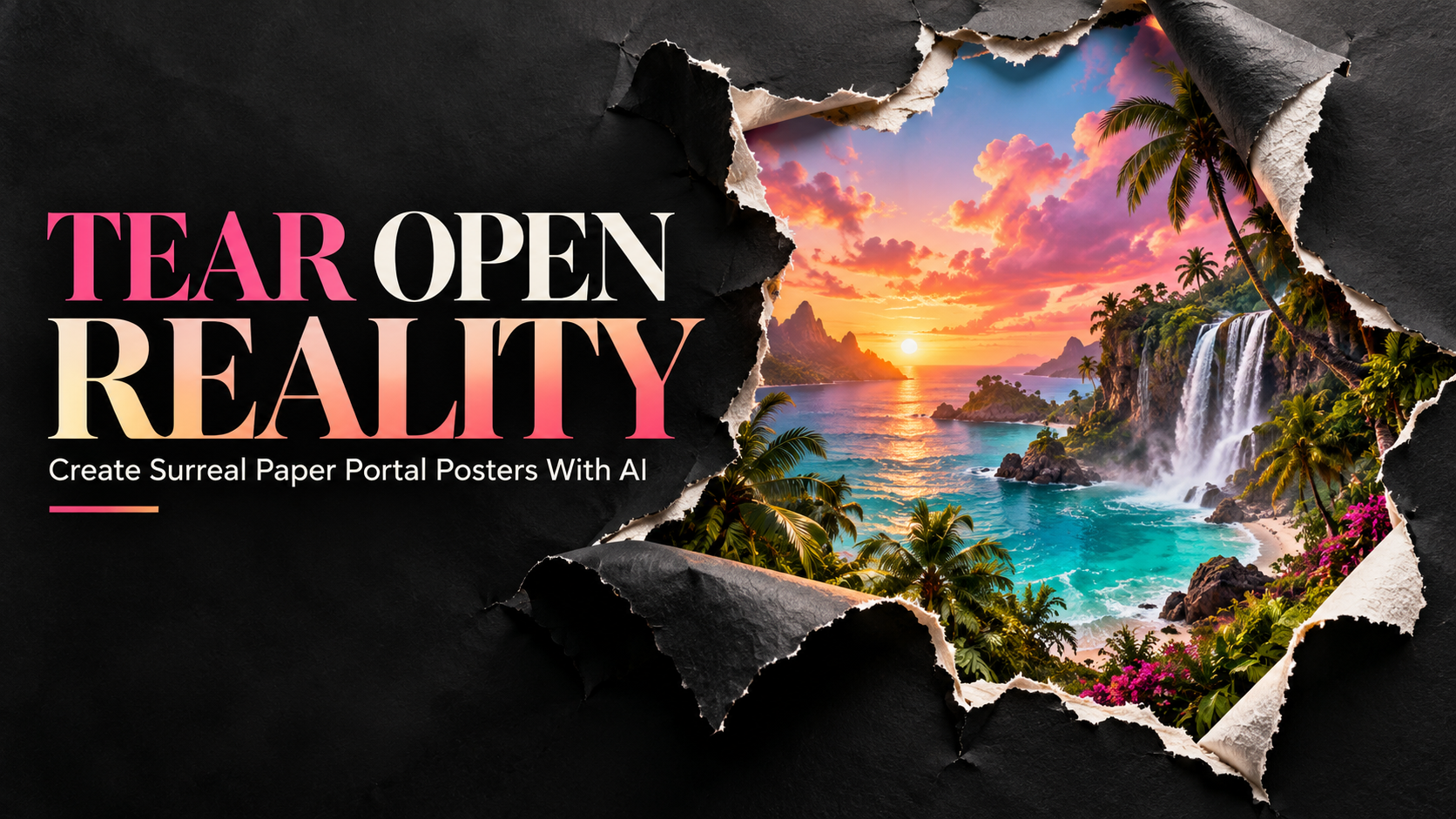
One unexpected visual can stop a scroll faster than a complicated layout. A simple sheet of paper becomes fascinating when a ripped opening reveals a place that should not exist behind it.
This AI poster technique mixes tactile realism with an impossible environmental reveal. The contrast between a quiet outer surface and a cinematic world beyond it produces flexible art for posters, campaigns and editorial covers.
Tear Open Reality: Create a Surreal Paper Portal Poster
Create a professional surreal editorial poster built around a highly realistic torn-paper portal. Outer material: [BASE MATERIAL AND COLOR]. Hidden environment: [HIDDEN WORLD OR ENVIRONMENT]. Exact poster headline, if required: [EXACT HEADLINE]. Show one dramatic irregular rip across the central surface, with visible paper fibers, layered thickness, curled corners, subtle fold stress and realistic shadows. The opening must look like genuine torn physical material, not a flat masked selection or printed image. Inside the opening, build a fully three-dimensional environment containing [MAIN SUBJECT OR LANDSCAPE]. Use strong foreground, middle-ground and background separation with natural atmospheric perspective. A few plants, waves, structures or other environment details may emerge slightly through the tear if physically plausible. Use deliberate contrast. Keep the untouched surface relatively minimal in [OUTER PALETTE], while the interior glows with [HIDDEN WORLD PALETTE]. Light from the hidden landscape should bounce subtly onto the adjacent torn paper. The inner lighting can be different from the outer studio light, but all cast shadows must remain logical. Use a premium advertising art-director’s eye: one dominant portal, a recognizable reveal, clear visual hierarchy, generous typography space and balanced composition. Shoot/render with a realistic editorial camera perspective, sharp textured material in the foreground and convincing depth in the revealed space. If typography is included, spell [EXACT HEADLINE] correctly in bold contemporary type positioned only within negative space. Do not add invented captions, pseudo-logos, gibberish or watermarks. If the lettering is unreliable, omit it and reserve the space for post-production. Avoid cartoon paper tears, comic-book glows, digital collage borders, random extra portals, mismatched lighting, excessive particles or cluttered composition. Final: a photorealistic premium conceptual poster showing an impossible world physically hidden behind torn [BASE MATERIAL]. Output 4:5 portrait for social or print, and make a 16:9 hero crop when needed.
What This Prompt Creates
A premium conceptual poster in which a tactile outer surface is ripped open to reveal an entirely different world. The design depends on material realism, contrasting environments and strong editorial hierarchy, making it useful for event posters, album campaigns, travel promotions and experimental portfolios.
How to Use It
1. Pick a calm base material such as black card, aged parchment, white paper or textured concrete.
2. Define a surprising hidden location with clear color and mood contrast.
3. Specify one large tear with curls, thickness, fibers and a convincing light spill.
4. Generate a portrait poster and check the boundary between both environments.
5. Add final brand-approved typography separately if accuracy matters.
Make It Your Own
Underwater Discovery
Beige parchment opens to a glowing underwater city and marine life.
Cyberpunk City
Matte black cardstock tears open to reveal a hot-pink and cyan futuristic metropolis.
Secret Garden
Minimal white stock opens onto an emerald botanical garden with leaves emerging through the opening.
Cosmic Escape
Concrete fractures reveal luminous planets, nebulae and floating rock formations.
Retro Summer Escape
Vintage magazine paper opens onto an orange-turquoise 1970s beach scene.
Tips for Better Results
• One convincing rip is usually stronger than several competing openings.
• Use fibers, thickness and realistic curl tension to sell the material.
• Give the hidden world foreground, midground and background rather than a flat backdrop.
• Choose palettes with immediate visual contrast.
• Let a little interior light color the torn edges.
• Reserve typography space and verify every displayed word.