
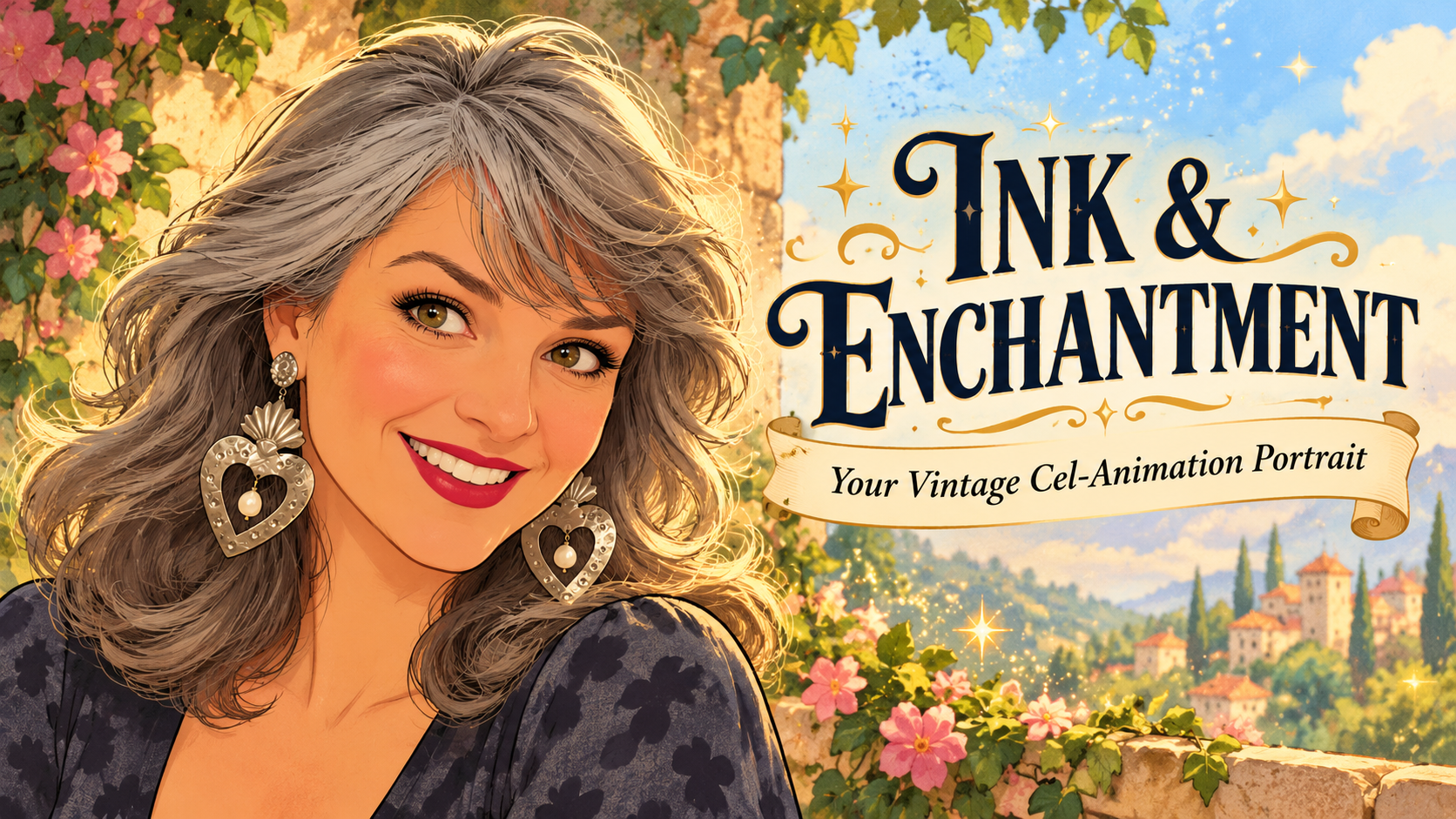
A vintage cartoon portrait works best when it feels hand-drawn, not simply filtered. The charm comes from rounded character design, delicate ink outlines, painted color and the expressive warmth of early theatrical animation.
This prompt turns a personal photo into an original storybook character inspired by the Golden Age of hand-drawn animation. It protects the person’s most recognizable traits while leaving room for an imaginative setting.
Copy the AI Prompt
Use my uploaded photograph as the sole identity reference. Transform the person into an ORIGINAL vintage hand-drawn animated storybook character inspired by the 1930s–1950s Golden Age of theatrical cel animation. Preserve the person’s identity: recognizable face shape, natural skin tone, hairstyle and hair color, age cues, distinctive nose, eyebrow shape, smile, glasses, facial hair and any other visible signature features. Make the face gently stylized with appealing rounded shapes, expressive eyes, simple elegant linework and natural anatomy, never baby-faced unless the reference is a child. Draw with delicate hand-inked outlines of varied thickness, authentic painted cel colors, restrained two-tone cel shadows, subtle watercolor/gouache background textures, very faint paper and film-grain detail. Place the character in [STORYBOOK LOCATION], wearing [WARDROBE], performing [FRIENDLY ACTION] with an inviting, playful expression. Compose a single character portrait at three-quarter length, slightly off-center, with readable silhouette and a softly painted atmospheric background. Art direction: classic storybook staging, warm gentle key light, harmonious cream, muted teal, honey and coral palette; avoid modern neon gradients or glossy 3D plastic surfaces. Output one vertical 4:5 image with comfortable negative space around the subject; when creating carousel artwork, allow extra safe margins for text. Do not reproduce a specific Disney character, movie still, logo, copyrighted costume or modern brand mascot. No extra people, no distorted hands, no duplicated fingers, no text, no watermark, no split-screen unless explicitly requested. The result must look like a newly invented character from a beautifully restored vintage cel-animated film, recognizably based on the uploaded person.
What This Prompt Creates
An original hand-drawn-looking cartoon character based on a reference portrait, with recognizable hair, face shape, complexion, glasses or facial hair, plus lively expressions and painterly period atmosphere. The goal is a standalone new character rather than a copy of an existing Disney character.
How to Use It
1. Upload a clear front-facing or three-quarter portrait with even light.
2. Specify an expressive pose and one simple setting, such as a storybook garden or old-town street.
3. Paste the full prompt; keep identity-preservation and hand-inked cel-painting instructions intact.
4. Generate a clean 4:5 character portrait. Compare hairstyle, glasses and defining features with the original.
5. For the featured image, adapt the composition to 1672×941 and place the headline in your design editor.
Make It Your Own
1. Enchanted Forest — Give the character a mossy woodland backdrop, painted mushrooms and pale sunrise.
2. Jazz-Age City — Use 1930s storefronts, warm streetlamps and a playful walking pose.
3. Seaside Adventure — Paint a whimsical harbor with soft blue skies and wind-blown clothes.
4. Classic Black and White — Create a 1930s rubber-hose-inspired monochrome frame with light film grain and simple shapes.
Tips for Better Results
• Keep eye spacing, nose silhouette, hairline and glasses faithful to the reference even as proportions become stylized.
• Ask for hand-painted cel shading, ink-line variation and subtle animation-paper grain rather than photorealistic textures.
• Avoid inserting existing characters, studio logos or familiar branded costumes.
• Generate a clean art image first and add any article headline or carousel labels afterward.