
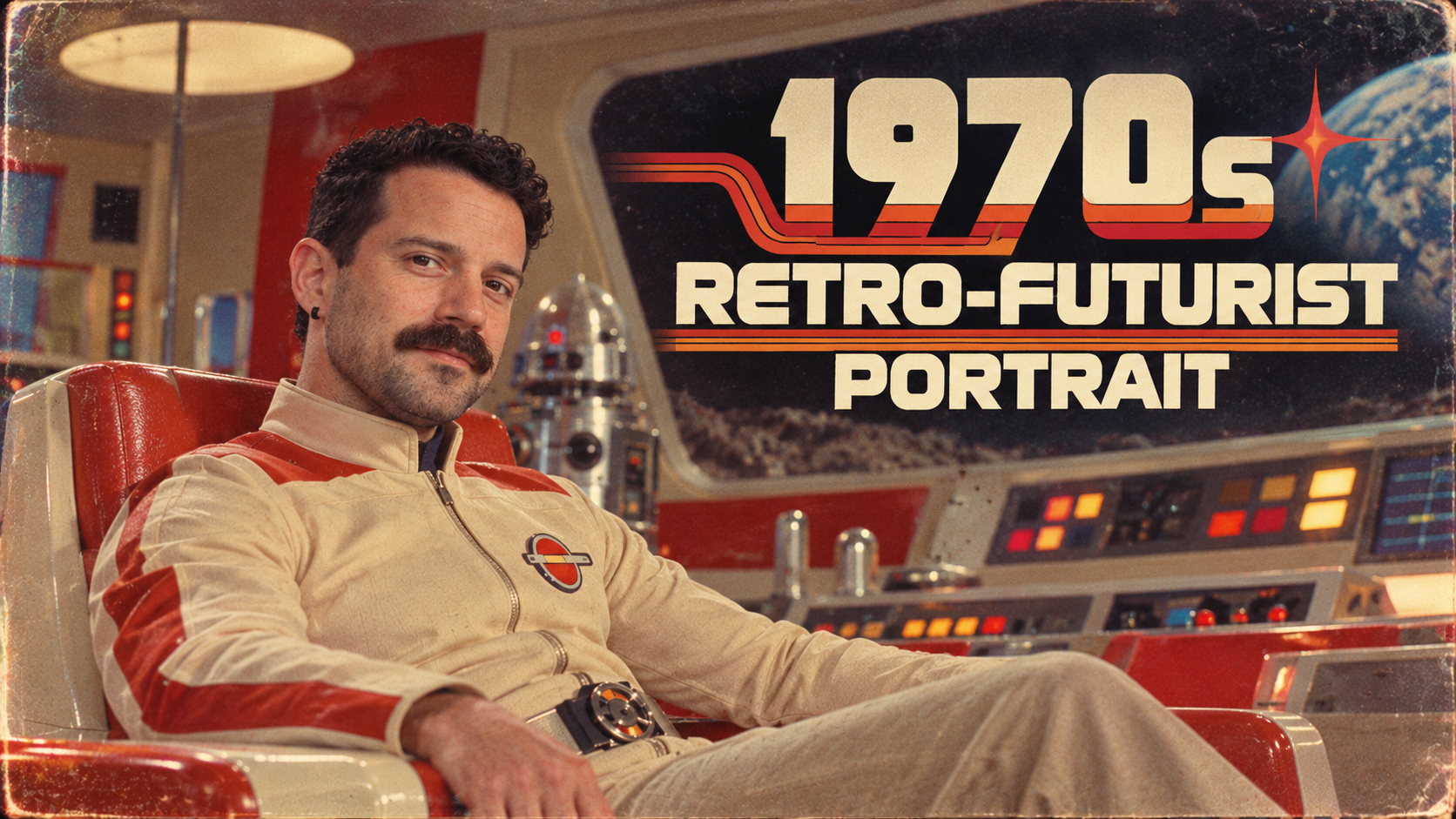
A vintage look is more than adding grain and lowering the saturation. The thing that makes old science-fiction cinema convincing is that the future was built with the materials, lenses, lighting, costumes, and visual-effects techniques available at the time.
This prompt recreates that entire production language. Instead of making a modern spaceship and placing a retro filter over it, it asks the AI to imagine a science-fiction film that could genuinely have been photographed in the 1970s.
1970s Retro-Futurist Portrait Prompt
Use my uploaded portrait as the identity reference and transform the subject into a believable still from a fictional 1970s science-fiction movie. Preserve the subject’s recognizable identity, facial structure, skin tone, age, hairstyle, body proportions, and defining features. Do not redesign the person into a different character. SCENE: [SPACE COMMAND BRIDGE / LUNAR OUTPOST / ROBOT LABORATORY / INTERPLANETARY LOUNGE / ALIEN EXPEDITION] WARDROBE: Dress the subject in a period-authentic 1970s vision of futuristic clothing: [IVORY SPACE UNIFORM / SILVER JUMPSUIT / COLOR-BLOCK FLIGHT SUIT / RETRO-FUTURIST TAILORING]. Use simple geometric panels, wide collars, ribbed fabrics, vinyl, metallic details, chunky belts, and restrained insignia. Avoid modern tactical armor. PRODUCTION DESIGN: Build the environment as if it were a physical soundstage constructed in the 1970s. Use molded fiberglass walls, painted plywood scenery, smoked acrylic, chrome trim, vinyl upholstery, chunky analog switches, rotary knobs, incandescent indicator lamps, simple monochrome or CRT-style monitors, mechanical levers, and visible practical props. The technology should feel futuristic from a 1970s perspective, not futuristic from a modern perspective. No touchscreens, floating holograms, sleek modern tablets, contemporary LED light strips, or minimalist glass interfaces. Include one or two charming practical science-fiction details such as a simple cylindrical robot, translucent dome machinery, miniature spacecraft, mechanical arm, communications console, or physical navigation display. BACKGROUND EFFECTS: If space, planets, moons, or alien terrain are visible, render them like period visual effects: painted backdrops, miniature models, rear-projection-style imagery, matte-painting aesthetics, or slightly imperfect optical compositing. Keep the effect convincing but not digitally flawless. CAMERA AND COMPOSITION: Frame the image like a 1970s theatrical science-fiction film photographed in vintage widescreen anamorphic cinema. Use a cinematic 2.39:1 feeling, deliberate blocking, slightly wider composition, practical foreground objects, and strong set geometry. Use period-style optics: gentle lens softness, slightly lower micro-contrast, modest edge softness, restrained anamorphic-style flare, natural focus falloff, and no hyper-sharp digital rendering. LIGHTING: Use tungsten-heavy practical set lighting, soft overhead fixtures, glowing console lamps, motivated side light, and simple studio fill. Highlights may bloom slightly. Shadows should retain shape without modern HDR recovery. FILM CHARACTER: Make the image feel captured and printed on 1970s color motion-picture film. Include fine but visible organic grain, subtle color fading, slightly warm skin tones, muted blacks, gentle highlight halation, minor exposure inconsistency, very subtle gate weave, and a small amount of optical softness. The image should feel like a well-preserved or lightly restored vintage film frame, not a damaged photograph and not a modern digital image with a social-media filter. COLOR PALETTE: Favor cream, ivory, burnt orange, brick red, mustard, tobacco brown, muted blue, avocado, silver, black, and warm tungsten amber. Keep saturation controlled and slightly aged. MOOD: [CONFIDENT / CURIOUS / TENSE / HEROIC / MYSTERIOUS / CASUALLY FUTURISTIC] Avoid modern CGI polish, razor-sharp 8K detail, cyberpunk neon, holographic displays, contemporary spacesuits, tactical armor, modern UI design, glossy video-game rendering, excessive teal-and-orange grading, plastic skin, text, logos, or watermarks. The final image should look like an authentic frame from a science-fiction movie that was genuinely photographed on a physical set in the 1970s, with period production design, period camera behavior, and period visual effects—not a modern sci-fi portrait wearing a retro filter.
What This Prompt Creates
A cinematic portrait that looks like a still from a fictional 1970s science-fiction production. Expect molded plastic interiors, analog switches, glowing indicator lamps, simple practical robots, retro-futurist wardrobe, painted or optically composited space backgrounds, period-appropriate set lighting, and visibly analog image texture.
The most important part is the photographic finish: softer lenses, reduced micro-contrast, natural film grain, gentle highlight bloom, slightly faded color, restrained dynamic range, and tiny imperfections that prevent the result from looking like pristine modern digital photography.
How to Use It
Upload a clear portrait and use it as the identity reference. Replace the bracketed fields with the type of scene, wardrobe, setting, and mood you want. Keep the production design intentionally physical: buttons instead of holograms, molded panels instead of seamless digital interfaces, painted scenery instead of hyper-detailed CGI, and practical lamps instead of modern LED strips.
For the strongest result, ask for a frame from a fictional 1970s movie rather than a modern portrait with a vintage filter. That distinction pushes the model to change the set design, wardrobe, camera language, and visual effects along with the color treatment.
Make It Your Own
Space Command: Place the subject on the bridge of an aging deep-space cruiser with chunky consoles, CRT-like screens, rotary switches, cream plastic walls, and red-orange accents.
Lunar Outpost: Build a low-budget moon-base interior with corrugated walls, utilitarian equipment, dusty windows, practical helmets, and an obvious miniature landscape outside.
Robot Laboratory: Surround the subject with charmingly mechanical robots, blinking bulbs, metal arms, translucent domes, and oversized analog diagnostic equipment.
Interplanetary Lounge: Create a luxurious space-age lounge with smoked glass, chrome furniture, spherical lamps, shag carpeting, and a giant planetary view through a curved window.
Alien Expedition: Move the scene outdoors onto a stylized alien landscape built from rocks, fog, painted skies, miniature structures, and visibly practical creature or prop design.
Tips for Better Results
Ask for “1970s film production design” rather than simply “retro.” Retro alone can drift into modern nostalgia instead of authentic period construction.
Describe practical materials such as fiberglass, chrome, vinyl, painted plywood, smoked acrylic, incandescent indicator lamps, knobs, switches, and physical control panels.
Avoid ultra-clean modern CGI, razor-sharp digital detail, floating holograms, contemporary LED strips, and slick glass interfaces. Those instantly break the illusion.
For the movie look, specify vintage widescreen anamorphic-style framing, soft edge detail, mild lens flare, film grain, subtle gate weave, highlight halation, faded print color, and slightly compressed dynamic range.
Keep the effects believable for the era. A painted planet, miniature spacecraft, rear-projection feel, or imperfect optical composite can actually make the final image look more convincing.