
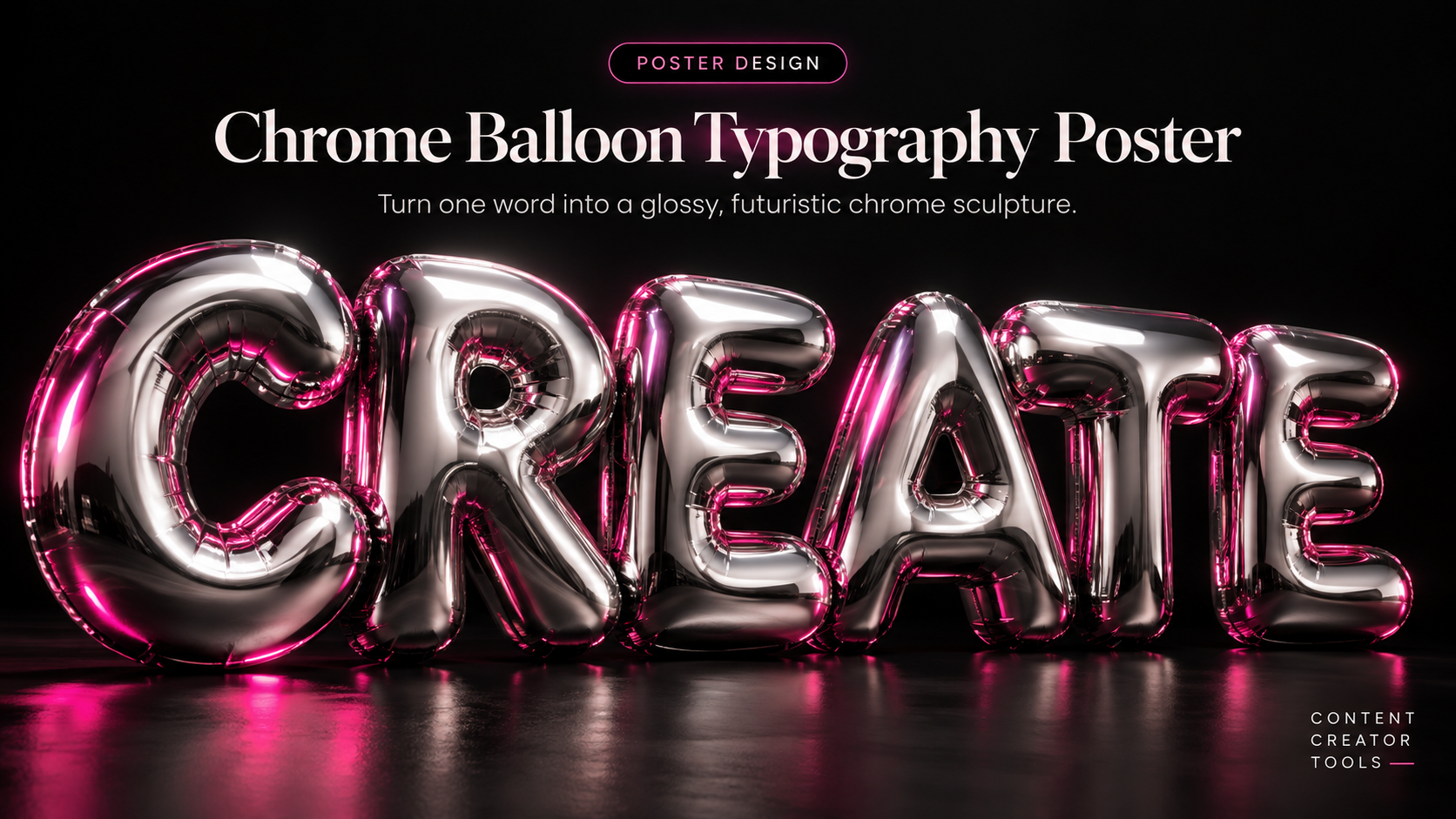
Typography doesn’t always have to sit on the design. Sometimes it can become the design.
This prompt turns a single word into a physical chrome sculpture, combining typography, product photography, and editorial art direction. It’s especially effective when you want a poster that feels expensive and experimental without filling the canvas with dozens of elements.
Chrome Balloon Typography Poster Prompt
Create a high-end vertical editorial poster centered around the word “[YOUR WORD].” Transform the word into enormous three-dimensional inflated balloon typography made from polished mirror chrome. Each letter should feel physically sculpted, soft, rounded, slightly overinflated, and realistically reflective rather than like ordinary metallic text. Arrange the letters as one dramatic typographic sculpture filling most of the composition. Use realistic studio reflections, subtle surface imperfections, soft creases around inflated edges, believable highlights, and deep dimensional shadows. Place the sculpture against a clean near-black studio background with generous negative space. Introduce controlled [ACCENT COLOR] lighting that reflects naturally across portions of the chrome without completely recoloring the metal. Use a dramatic fashion-editorial lighting setup: large softbox reflections, sharp rim lighting, deep blacks, glossy highlights, and subtle atmospheric haze. The image should feel photographed in a professional studio rather than rendered as basic 3D artwork. Add very minimal supporting graphic design around the sculpture: tiny condensed sans-serif typography, a small issue number, subtle alignment marks, and one understated caption. Keep all supporting elements secondary to the giant word. Composition: bold asymmetry, oversized typography extending close to the frame edges, strong negative space, premium art-direction, contemporary design-magazine aesthetic. Style: futuristic editorial photography, experimental typography, luxury campaign art direction, photorealistic materials, dramatic contrast, sophisticated rather than playful. Avoid cartoon balloon letters, plastic-looking chrome, excessive text, rainbow reflections, cluttered layouts, generic cyberpunk elements, obvious AI artifacts, warped letters, illegible spelling, and unnecessary decorative objects. Vertical 4:5 composition, extremely detailed, sharp professional finish, realistic materials and lighting.
What This Prompt Creates
The prompt generates a dramatic 3D typographic poster where your chosen word appears as inflated reflective chrome lettering. Expect oversized letterforms, realistic metallic reflections, controlled accent lighting, deep shadows, and a minimalist editorial layout.
It’s ideal for campaign posters, event announcements, creative-brand graphics, album artwork, social posts, magazine covers, or simply experimenting with typography as an image rather than conventional text.
How to Use It
Replace [YOUR WORD] with a short word that has visual impact. Words between roughly three and eight letters usually give the model enough room to create large, recognizable letterforms.
Then replace [ACCENT COLOR] with your preferred lighting color. Keep the rest of the prompt intact for your first generation. Once you have a composition you like, start adjusting materials, lighting, camera angle, and environment instead of changing everything simultaneously.
Make It Your Own
Liquid Chrome
Replace inflated balloon lettering with molten chrome letters that appear to be slowly melting onto the floor.
Hot Pink Acrylic
Swap mirror chrome for translucent fluorescent-pink acrylic with internal illumination and realistic refraction.
Clear Glass
Turn the letters into thick blown-glass sculptures with tiny bubbles, distortion, caustics, and studio reflections.
Crushed Metal
Ask for dented aluminum typography with folds, scratches, and industrial imperfections for a rougher editorial aesthetic.
Soft Fabric
Create oversized padded satin letters with visible seams and subtle wrinkles for a fashion-campaign interpretation.
Tips for Better Results
Keep your main word short and spell it explicitly in quotation marks. Image models can still struggle with typography, so regenerate rather than accepting badly formed letters.
Describe materials and physical behavior, not just styles. “Polished mirror chrome with softbox reflections and tiny surface imperfections” usually gives the model more useful direction than simply saying “futuristic.”
Treat accent colors as lighting rather than changing the entire object color. Reflected pink or blue light across silver chrome tends to look considerably more photographic.
If the composition starts becoming cluttered, remove supporting copy from the generation prompt and add your real typography afterward in Photoshop, Illustrator, or Canva.
For a series, keep the same camera, background, material, and lighting instructions while changing only the hero word. That can quickly turn one successful generation into a recognizable campaign system.