
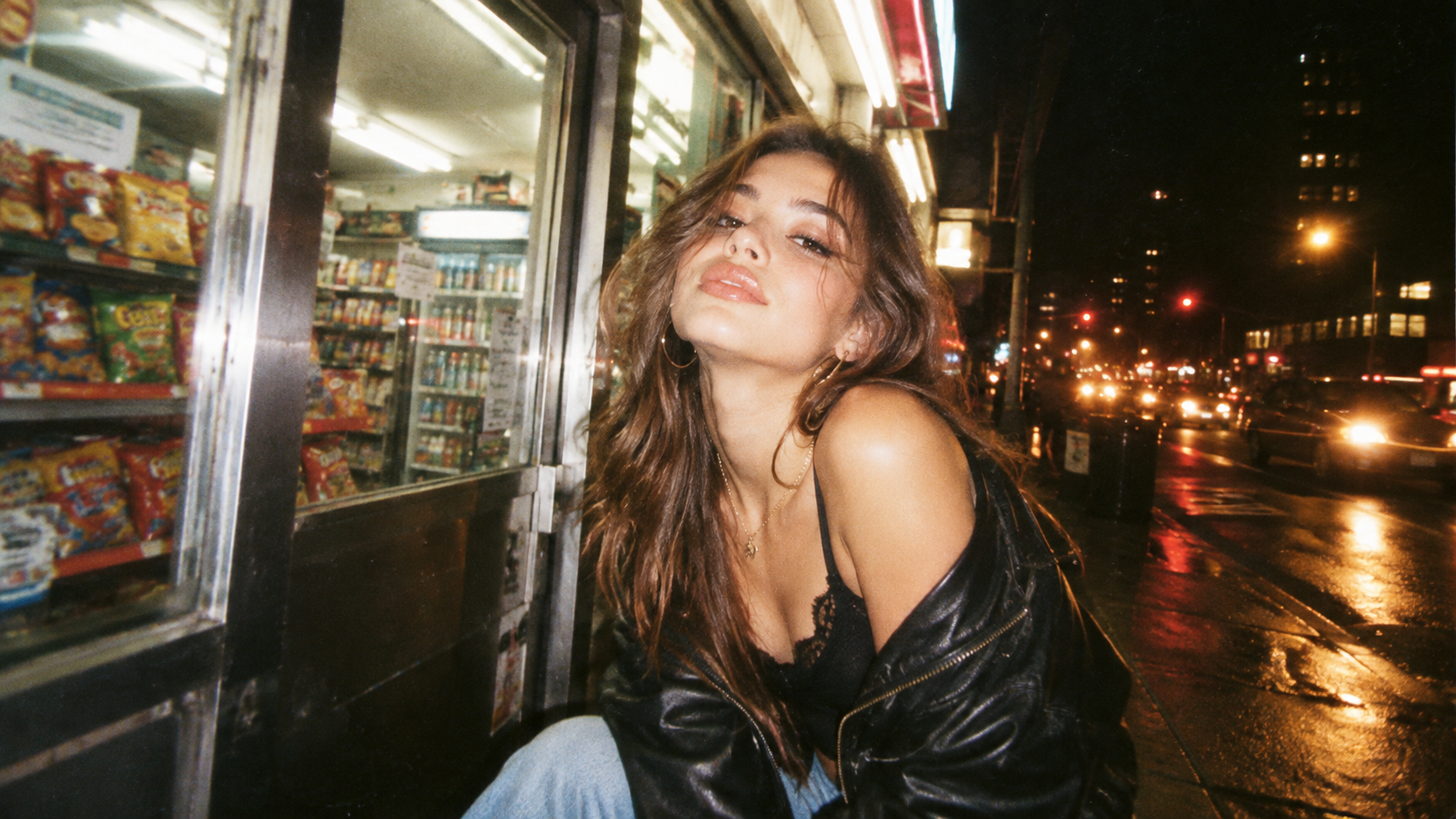
Perfect lighting is not always what makes a photograph memorable. Sometimes the charm comes from a flash that is a little too hard, a crop that feels accidental, and a moment that looks like it happened before anyone had time to pose.
This prompt recreates the visual language of disposable and inexpensive point-and-shoot cameras while keeping the styling intentional enough for an editorial. The result feels spontaneous, nostalgic, and a little chaotic—in the good way.
Disposable Camera Editorial Prompt
Create a photorealistic editorial portrait that looks like it was captured spontaneously on a cheap disposable 35mm point-and-shoot camera. Subject: [SUBJECT AND APPEARANCE] Wardrobe: [WARDROBE / STYLE] Location: [LOCATION / ENVIRONMENT] Moment: [WHAT THE SUBJECT IS DOING] Time: [NIGHT / LATE AFTERNOON / INDOOR LOW LIGHT / OTHER] Mood: [PLAYFUL / COOL / INTIMATE / CHAOTIC / CAREFREE / BACKSTAGE / NIGHTLIFE] Photograph the scene with a small built-in on-camera flash positioned close to the lens. The flash should hit the subject directly, producing bright foreground exposure, crisp flash shadows, shiny highlights on skin and fabric, quick light falloff, and a noticeably darker ambient background. Make the framing feel spontaneous rather than professionally perfected: slight camera tilt, off-center composition, casual crop, foreground objects partially entering frame, or a moment captured just before or after the ideal pose. Preserve realistic facial anatomy, recognizable identity, natural skin texture, believable hands, wardrobe details, and accurate environmental perspective. Add authentic inexpensive-film characteristics: moderate 35mm grain, slight color noise, subtle warm or green color shifts, mild softness toward the edges, occasional motion softness, small amounts of flash bloom, imperfect white balance, and slightly inconsistent exposure. Allow selected highlights from skin, reflective surfaces, signage, or white clothing to become slightly overexposed. Do not recover every bright area perfectly. Background ambient light should remain visible but secondary: streetlights, convenience-store fluorescents, party lights, car headlights, hallway bulbs, or practical lamps should create natural points of color and depth behind the flash-lit subject. The subject should feel fashionable and editorial, but the photograph itself should feel accidental, immediate, and personal—as if a stylish moment was captured quickly with one disposable camera shot. Camera behavior: compact disposable-camera perspective, approximately 28–35mm equivalent lens, fixed-focus feel, direct flash, consumer-film exposure, natural perspective, no artificial cinematic depth-of-field effect. Avoid perfect studio lighting, large softboxes, ultra-clean digital sharpness, HDR, excessive background blur, flawless centered composition, heavy skin smoothing, fake film borders, excessive scratches, exaggerated light leaks, random timestamps, text, logos, captions, or decorative graphics. Final result: contemporary editorial styling photographed with authentic disposable-camera imperfections, candid point-and-shoot energy, realistic flash photography, nostalgic analog character, and believable 35mm film texture.
What This Prompt Creates
This prompt creates a fashion or lifestyle portrait that looks as though it was captured on a disposable film camera rather than produced in a polished studio.
Expect hard frontal flash, bright skin highlights, darker ambient backgrounds, visible grain, slightly uneven exposure, casual composition, occasional motion softness, and imperfect crops. The subject can still have strong wardrobe, makeup, and art direction, but the photograph should never feel overly controlled.
It works especially well for nightlife portraits, backstage imagery, street style, musician press photos, house-party editorials, travel diaries, couple shoots, fashion lookbooks, and social content that needs more personality than another perfectly lit portrait.
How to Use It
Start with [SUBJECT AND WARDROBE]. Give the subject a clear fashion or lifestyle direction, but avoid describing an overly formal pose. Disposable-camera photography works best when the body language feels relaxed, caught mid-moment, or slightly off-guard.
Next, choose a believable environment such as a corner store, parking lot, backstage hallway, apartment party, motel, sidewalk, diner, elevator, beach at night, or hotel corridor.
Then define the flash behavior. The key is a small on-camera flash close to the lens: bright foreground exposure, quick falloff into the background, hard-edged shadows, occasional reflective glare, and slightly blown highlights.
Finally, allow controlled imperfection. Slight tilt, off-center framing, cropped limbs, mild motion blur, grain, color shifts, and inconsistent ambient exposure are features here—not mistakes to remove.
Make It Your Own
Backstage Flash: Put the subject in a cramped dressing room, venue hallway, or backstage loading area with direct flash, cables, mirrors, cases, and people partially entering the frame.
House Party Editorial: Use a crowded apartment party with flash-lit faces, dark corners, blurred friends, plastic cups, reflective decorations, and messy candid energy.
Street Style After Dark: Photograph the subject beside storefronts, taxis, convenience stores, parking lots, or neon signs with wet pavement and strong flash separation.
Vacation Snapshot: Move the concept to a motel balcony, beach bar, night market, amusement park, or roadside stop and let the photograph feel like a stylish travel memory.
Couples Shoot: Use close, affectionate, playful poses with slightly awkward framing and flash-heavy exposure so the images feel personal rather than like formal engagement photos.
Tips for Better Results
Use direct flash language explicitly. Ask for a small built-in camera flash positioned close to the lens rather than generic dramatic lighting.
Do not make everything vintage. Keep clothing, location, and subject contemporary if you want the camera treatment—not the entire decade—to create the nostalgia.
Let some highlights clip. Perfectly recovered highlights and flawless dynamic range usually make the result feel digital and expensive rather than disposable.
Keep the grain believable. Ask for fine-to-moderate 35mm film grain and slight color noise instead of covering the image in exaggerated texture.
Avoid making every imperfection happen at once. One slightly tilted frame, a bit of blur, hard flash, and grain are often enough. Too many scratches, light leaks, dust marks, timestamps, and extreme color shifts can turn the image into a filter parody.